
Home/Wellness Zone/Sakra Blogs

29th Sep, 2026
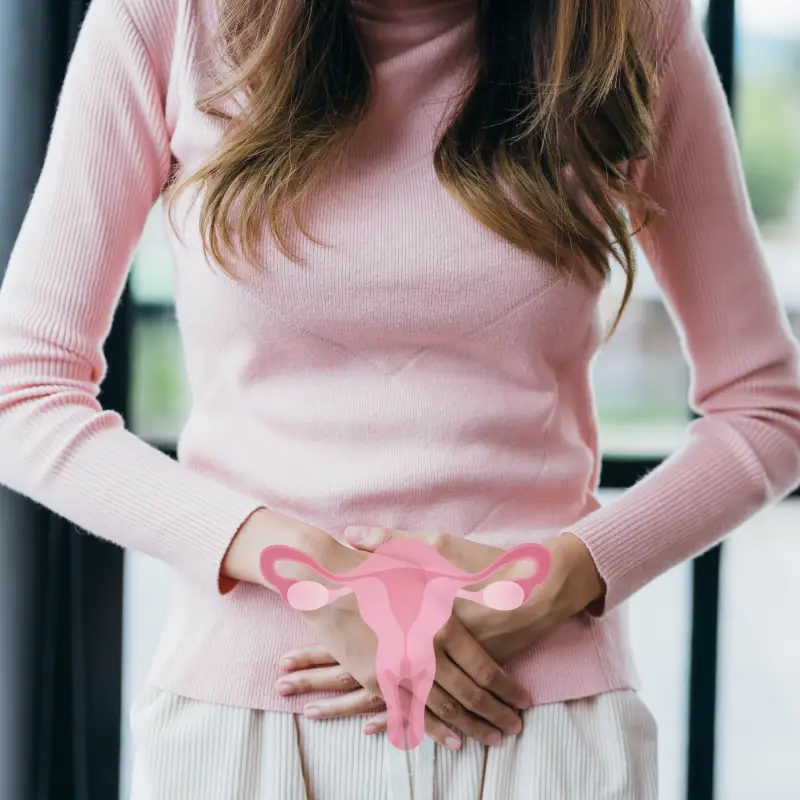
PCOD and PCOS are terms that are often used interchangeably, but they do not mean exactly the same thing. Both are associated with hormonal and reproductive changes, and both can affect menstrual cycles, ovulation, weight, skin, and fertility.
Understanding the difference between PCOS and PCOD is important because the conditions can differ in their underlying features, severity, long-term health risks, and management.
It is also important to note that PCOS is a well-established medical diagnosis, whereas PCOD is a commonly used term that may refer to a range of ovarian and hormonal symptoms. In current medical practice, doctors generally use PCOS rather than PCOD when a woman meets the accepted diagnostic criteria.
PCOD, or polycystic ovarian disease, is a commonly used term for a condition in which the ovaries may produce immature or partially developed eggs, sometimes resulting in multiple small follicles.
The term PCOD is widely used in everyday healthcare discussions, particularly in South Asia. However, it is not generally considered a distinct, universally defined medical diagnosis in the same way as PCOS.
Women described as having PCOD may experience irregular periods, weight gain, acne, or difficulty with ovulation. The exact symptoms and underlying causes can vary between individuals.
PCOS, or polycystic ovary syndrome, is a hormonal and metabolic disorder that can affect ovulation, androgen levels, and metabolism.
PCOS may be associated with:
Irregular ovulation: Hormonal changes can interfere with regular egg release from the ovaries.
Higher androgen activity: This can contribute to excess facial or body hair, acne, or scalp hair thinning.
Insulin resistance: Many women with PCOS have reduced sensitivity to insulin, although this does not occur in every woman.
Menstrual irregularities: Periods may be infrequent, unpredictable, or absent.
Fertility problems: Irregular ovulation can make conception more difficult for some women.
Metabolic risks: PCOS is associated with a higher risk of insulin resistance, type 2 diabetes, abnormal cholesterol levels, and other metabolic concerns.
The difference between PCOS and PCOD is mainly related to how the terms are defined and understood medically.
|
Feature |
PCOD |
PCOS |
|
Meaning |
Commonly used term for polycystic ovarian changes or symptoms |
Polycystic ovary syndrome, a recognised hormonal and metabolic disorder |
|
Medical classification |
Not a uniformly defined separate diagnosis |
Established clinical diagnosis |
|
Ovulation |
May be irregular |
Often irregular or absent |
|
Androgen excess |
May occur but is not necessarily a defining feature |
Common feature in many women |
|
Insulin resistance |
May occur |
Common, but not present in every woman |
|
Metabolic risks |
Depend on the individual |
Increased risk of several metabolic conditions |
|
Long-term health concerns |
Depend on underlying features |
Can include diabetes, cardiovascular risk factors, and endometrial problems |
|
Diagnosis |
Term may be used differently by different practitioners |
Based on established clinical criteria |
|
Management |
Depends on symptoms and underlying cause |
Individualised treatment addressing reproductive, hormonal, and metabolic health |
No, although the terms are frequently used as though they are the same.
PCOS is a recognised syndrome involving a combination of reproductive, hormonal, and metabolic features. PCOD is a broader and less precisely defined term that is commonly used to describe polycystic ovarian changes or related symptoms.
A woman should not assume she has PCOS simply because an ultrasound shows multiple follicles in the ovaries. Polycystic-appearing ovaries can occur without PCOS, and ovarian appearance alone does not establish the diagnosis.
There can be considerable overlap between symptoms described as PCOD and those seen in PCOS.
Possible symptoms include:
Irregular periods: Menstrual cycles may be longer, unpredictable, or absent.
Excess hair growth: Increased androgen activity can cause unwanted hair growth on the face or body.
Acne: Hormonal changes may contribute to persistent acne or oily skin.
Hair thinning: Some women may develop thinning of scalp hair.
Weight changes: Weight gain or difficulty managing weight can occur, particularly when insulin resistance is present.
Ovulation problems: Irregular ovulation may affect fertility.
Skin changes: Darkened, thickened skin around the neck or skin folds may be associated with insulin resistance.
Having these symptoms does not automatically mean that a woman has PCOS. Other hormonal, metabolic, and reproductive conditions can cause similar symptoms.
PCOS is diagnosed based on a combination of clinical features rather than one test.
In adults, the Rotterdam criteria are commonly used. After excluding other possible causes, PCOS can generally be diagnosed when at least two of the following are present:
Irregular or absent ovulation, usually reflected by irregular menstrual cycles.
Clinical or biochemical signs of androgen excess, such as excess facial or body hair or elevated androgen levels on blood testing.
Polycystic ovarian morphology on ultrasound or other accepted imaging criteria.
Not every woman with PCOS will have polycystic-appearing ovaries on an ultrasound.
Both terms may be associated with problems related to ovulation, but PCOS is more clearly established as a cause of ovulatory infertility.
Irregular ovulation can reduce the frequency of egg release, making it harder to predict the fertile window. However, many women with PCOS can become pregnant naturally or with appropriate fertility treatment.
It is not medically useful to simply label one as “more serious” because PCOD is not a consistently defined diagnosis.
PCOS is a recognised syndrome that can involve both reproductive and metabolic health. Women with PCOS may have an increased risk of insulin resistance, type 2 diabetes, high cholesterol, sleep apnoea, and thickening of the uterine lining when periods are persistently infrequent.
The actual level of risk depends on the individual's symptoms, weight, metabolic health, family history, and other factors.
Lifestyle measures are an important part of managing PCOS and related hormonal symptoms.
Helpful habits may include:
Balanced nutrition: Emphasise vegetables, whole grains, pulses, lean proteins, healthy fats, and high-fibre foods.
Regular physical activity: Combining aerobic exercise with strength training can improve fitness and insulin sensitivity.
Healthy weight management: For women who are overweight or have obesity, modest weight loss may improve some PCOS-related symptoms.
Adequate sleep: Consistent, good-quality sleep supports metabolic and hormonal health.
Stress management: Managing chronic stress can support overall wellbeing and make healthy lifestyle habits easier to maintain.
Lifestyle changes can improve symptoms but should not be considered a permanent cure for PCOS.
Not every woman with PCOS needs the same treatment. Management depends on the symptoms, reproductive goals, metabolic health, and individual circumstances.
A doctor may recommend treatment to:
Regulate menstrual cycles.
Protect the uterine lining when periods are very infrequent.
Manage acne or unwanted hair growth.
Improve insulin resistance or metabolic health when appropriate.
Support ovulation when pregnancy is desired.
Manage associated conditions such as diabetes or high cholesterol.
PCOD and PCOS should not be viewed as two stages of the same disease. Since PCOD is not a uniformly defined medical diagnosis, it is more appropriate to evaluate the actual symptoms and determine whether the person meets the diagnostic criteria for PCOS.
If a woman has persistent irregular periods, androgen-related symptoms, fertility problems, or metabolic concerns, a healthcare professional can assess the underlying cause.
Medical evaluation is recommended if menstrual cycles are consistently irregular or absent, particularly when other symptoms are present.
You should consider consulting a healthcare professional if you experience:
Periods that are repeatedly irregular or absent.
New or excessive facial or body hair.
Persistent acne.
Significant scalp hair thinning.
Unexplained weight changes.
Difficulty becoming pregnant.
Signs of insulin resistance or high blood sugar.
Heavy or prolonged menstrual bleeding.
Early assessment can help identify PCOS or other conditions that may cause similar symptoms.
The difference between PCOS and PCOD can be confusing because the terms are often used interchangeably. However, PCOS is a clearly recognised hormonal and metabolic syndrome, while PCOD is a less precisely defined term commonly used to describe certain ovarian or hormonal changes.
In PCOD vs PCOS, the most important point is that symptoms such as irregular periods, acne, excess hair growth, weight changes, or fertility problems should be evaluated rather than diagnosed based on an ultrasound or a label alone. Proper assessment can help determine the underlying condition and guide appropriate long-term management.
1. What is the main difference between PCOS and PCOD?
PCOS is a recognised hormonal and metabolic syndrome diagnosed using established clinical criteria. PCOD is a commonly used but less precisely defined term that may describe polycystic ovarian or hormonal changes.
2. Are PCOS and PCOD the same condition?
No, although the terms are often used interchangeably in everyday conversation. PCOS has a specific medical definition, whereas PCOD does not have the same consistently established diagnostic definition.
3. Which is more serious, PCOD or PCOS?
It is difficult to compare them because PCOD is not a uniformly defined medical diagnosis. PCOS can involve reproductive and metabolic problems and may increase the risk of several long-term health conditions.
4. Can PCOD cause irregular periods?
Yes, women described as having PCOD may experience irregular periods due to problems with ovulation. However, irregular periods can have many causes and should be properly evaluated.
5. Can PCOS cause infertility?
Yes, PCOS can cause irregular or absent ovulation, which may make conception more difficult. Many women with PCOS can still conceive naturally or with appropriate fertility treatment.
6. Does everyone with PCOS have ovarian cysts?
No. Despite the name, ovarian cysts are not required for a PCOS diagnosis. Some women with PCOS do not have polycystic-appearing ovaries on ultrasound.
PCOD and PCOS are
29 Sep 2026
Vaginal discharge can change
22 Sep 2026

Menstrual periods stop permanently
22 Sep 2026

Ovarian cysts are fluid-filled
22 Sep 2026

Egg freezing, medically known
22 Sep 2026
Ovulation is the process
22 Sep 2026

Pregnancy increases the body’s
22 Sep 2026

If you think PCOS means
16 Sep 2026

Irregular periods refer to
31 Jul 2026

Vaginal bleeding refers to
31 Jul 2026

Staying active during pregnancy
5 Jun 2026

Breastfeeding is one of
5 Jun 2026

Preterm labor is a
5 Jun 2026
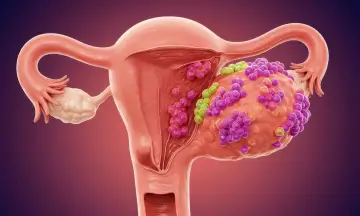
Ovarian cysts are fluid-filled sacs
4 Jun 2025
Vaginal yeast infections are a
4 Jun 2025

Women’s health is a vast
4 Jun 2025
Thyroid disorders in pregnancy can
13 Mar 2025
Abnormal Uterine Bleeding (AUB) is
17 Nov 2023
Pregnancy is a miraculous and
17 Nov 2023
Pregnancy is a beautiful and
17 Oct 2023
Polycystic Ovary Syndrome (PCOD) is
13 Oct 2023
Hearing aids and cochlear implants
13 Jul 2023

Pregnancy is probably one of
28 May 2020

Can Oral Health Have an
29 Jan 2018
How can high-risk pregnancies be
6 Mar 2017
What is a High Risk
6 Mar 2017
Fetal medicine and its role
6 Mar 2017

Women have been breastfeeding since
6 Mar 2017

It is an act that
6 Mar 2017

0n 14th Feb 2017, while
3 Mar 2017
Osteoporosis
2 Sep 2014
Enquire Now