

Home/Wellness Zone/Sakra Blogs

13th Mar, 2025
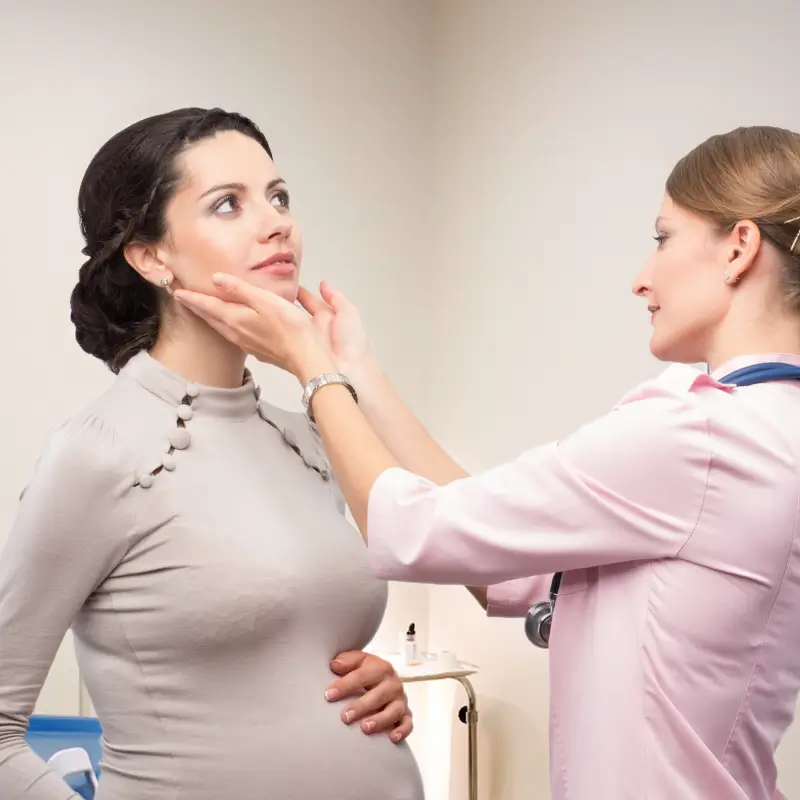
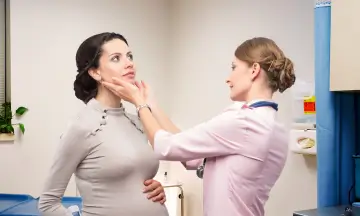
Thyroid disorders in pregnancy can affect both maternal and fetal health, making early detection and management essential. Conditions like hypothyroidism in pregnancy and hyperthyroidism impact hormone levels, which play a vital role in fetal development. Understanding thyroid in pregnancy, its effects on the baby, and how to control it ensures a healthier pregnancy outcome.
The thyroid gland produces hormones that regulate metabolism and energy levels. During pregnancy, the demand for thyroid hormones increases, making pregnant women more vulnerable to thyroid imbalances. The two main types of thyroid disorders in pregnancy are:
Thyroid disorders during pregnancy occur when the thyroid gland produces either too little or too much thyroid hormone. The most common types include:
Hypothyroidism: This occurs when the thyroid gland does not produce enough thyroid hormones. It may cause fatigue, weight gain, constipation, dry skin, and increased sensitivity to cold.
Hyperthyroidism: In this condition, the thyroid produces excessive amounts of thyroid hormones. Symptoms may include rapid heartbeat, sweating, anxiety, tremors, and unexplained weight loss. Graves’ disease is a common cause of hyperthyroidism during pregnancy.
Gestational Transient Thyrotoxicosis: This is a temporary increase in thyroid activity that can occur during early pregnancy due to high levels of the pregnancy hormone hCG. It often improves as pregnancy progresses.
Postpartum Thyroiditis: This is inflammation of the thyroid that can develop after childbirth. It may initially cause symptoms of an overactive thyroid and later lead to an underactive thyroid.
Several factors contribute to thyroid dysfunction during pregnancy, including:
Symptoms vary based on the type of thyroid disorder:
Uncontrolled thyroid problems in pregnancy can lead to serious complications for both the mother and the baby, including:
Thyroid function tests help diagnose thyroid disorders in pregnancy. Pregnant women with risk factors should undergo early screening. Key diagnostic steps include:
Proper management is key to a healthy pregnancy. Here are some ways to control thyroid problems in pregnancy:
Ignoring thyroid problems in pregnancy can lead to:
Some women develop postpartum thyroiditis, a temporary inflammation of the thyroid after delivery. Symptoms can resemble depression, so early detection is crucial.
Consult your doctor if you experience:
Managing thyroid in pregnancy is crucial for both the mother and baby. Regular monitoring, proper medication, a balanced diet, and a healthy lifestyle help control thyroid disorders. If you experience symptoms, consult a doctor for timely intervention to ensure a smooth pregnancy journey.
1. Can thyroid problems affect pregnancy test results?
No, thyroid disorders do not interfere with pregnancy test results, which detect hCG hormone.
2. What are normal thyroid levels during pregnancy?
TSH levels should be maintained within trimester-specific reference ranges, usually between 0.1-2.5 mIU/L in the first trimester.
3. Is it safe to take thyroid medication during pregnancy?
Yes, thyroid medication like levothyroxine is essential for managing hypothyroidism safely during pregnancy.
4. Can I have a normal delivery with thyroid problems?
Yes, with proper treatment and monitoring, most women can have a normal vaginal delivery.
5. How does thyroid dysfunction affect breastfeeding?
Hypothyroidism may cause low milk supply, but proper treatment helps maintain normal lactation.
6. Does stress affect thyroid function in pregnancy?
Yes, stress can impact thyroid hormone production, so stress management is crucial.
PCOD and PCOS are
29 Sep 2026
Vaginal discharge can change
22 Sep 2026

Menstrual periods stop permanently
22 Sep 2026

Ovarian cysts are fluid-filled
22 Sep 2026

Egg freezing, medically known
22 Sep 2026

Ovulation is the process
22 Sep 2026

Pregnancy increases the body’s
22 Sep 2026

If you think PCOS means
16 Sep 2026

Irregular periods refer to
31 Jul 2026
Vaginal bleeding refers to
31 Jul 2026

Staying active during pregnancy
5 Jun 2026

Breastfeeding is one of
5 Jun 2026

Preterm labor is a
5 Jun 2026
Ovarian cysts are fluid-filled sacs
4 Jun 2025
Vaginal yeast infections are a
4 Jun 2025

Women’s health is a vast
4 Jun 2025
Thyroid disorders in pregnancy can
13 Mar 2025
Abnormal Uterine Bleeding (AUB) is
17 Nov 2023
Pregnancy is a miraculous and
17 Nov 2023
Pregnancy is a beautiful and
17 Oct 2023
Polycystic Ovary Syndrome (PCOD) is
13 Oct 2023

Hearing aids and cochlear implants
13 Jul 2023
Pregnancy is probably one of
28 May 2020

Can Oral Health Have an
29 Jan 2018
How can high-risk pregnancies be
6 Mar 2017
What is a High Risk
6 Mar 2017
Fetal medicine and its role
6 Mar 2017

Women have been breastfeeding since
6 Mar 2017

It is an act that
6 Mar 2017
0n 14th Feb 2017, while
3 Mar 2017
Osteoporosis
2 Sep 2014
Enquire Now