
Home/Wellness Zone/Sakra Blogs

10th Aug, 2026
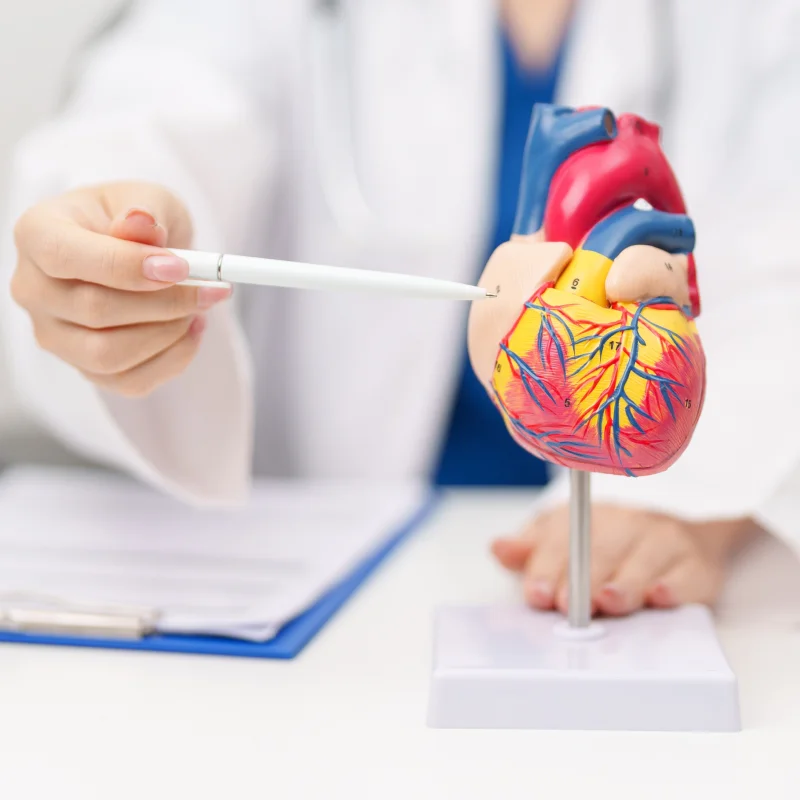
The heart is a strong, muscular organ that continuously pumps blood throughout the body. Its rhythmic contractions ensure that oxygen, nutrients, and hormones are delivered to tissues while waste products are removed efficiently.
Heart muscles, also known as cardiac muscles, are specialized muscles found only in the heart. They are involuntary, meaning they function automatically without conscious control, and are designed to work continuously throughout life without fatigue.
The structure of heart muscles is specially adapted for continuous and coordinated pumping of blood.
Made up of branched and interconnected muscle fibers
Cells are connected by intercalated discs for strong and rapid communication
Capable of generating and conducting electrical impulses
Highly resistant to fatigue, allowing nonstop activity
Supplied with a rich network of blood vessels for constant oxygen and nutrients
Organized into layers forming the heart wall (endocardium, myocardium, epicardium)
The heart pumps blood through a repeating cycle known as the cardiac cycle, which includes contraction and relaxation phases.
The atria (upper chambers) receive blood entering the heart
The ventricles (lower chambers) pump blood out of the heart
During systole (contraction), blood is pushed into arteries
During diastole (relaxation), the chambers fill with blood
The right side of the heart pumps blood to the lungs
Left side pumps oxygenated blood to the entire body
Valves ensure blood flows in one direction and prevent backflow
The heart has an internal electrical system that controls its pumping action and maintains a steady rhythm.
The sinoatrial (SA) node acts as the natural pacemaker
It generates electrical impulses that initiate each heartbeat
Signals spread across the atria, causing them to contract
The atrioventricular (AV) node receives and delays the signal slightly
The signal then travels to the ventricles, causing them to contract
This coordinated activity ensures efficient blood circulation
Various factors can influence the efficiency and health of heart muscles.
High blood pressure increases workload on the heart
Blocked arteries reduce oxygen supply to heart muscles
Physical inactivity weakens heart performance
Unhealthy diet contributes to fat buildup in arteries
Stress can affect heart rhythm and pressure
Smoking and alcohol damage heart tissues
Certain medical conditions can affect how well the heart muscles function.
Cardiomyopathy, where the heart muscle becomes weak or enlarged
Heart failure, reducing the heart’s ability to pump effectively
Myocardial infarction (heart attack), causing damage to heart tissue
Arrhythmias, leading to irregular heartbeats
Hypertrophy, where the heart muscle thickens abnormally
Maintaining a healthy lifestyle is essential for strong and efficient heart muscles.
Eat a balanced diet with fruits, vegetables, and whole grains
Exercise regularly to improve heart strength and circulation
Maintain a healthy body weight
Avoid smoking and limit alcohol consumption
Manage stress through relaxation techniques
Get regular health check-ups
Monitor blood pressure, cholesterol, and sugar levels
Heart muscles are essential for sustaining life by continuously pumping blood throughout the body. Understanding how they work and taking steps to maintain their health can ensure efficient heart function and overall well-being for years to come.
1. What is the main function of heart muscles?
Heart muscles contract and relax to pump blood throughout the body, ensuring proper circulation.
2. Why don’t heart muscles get tired easily?
They are specially adapted with a rich blood supply and unique structure that allows continuous activity without fatigue.
3. What controls the heartbeat?
The heartbeat is controlled by electrical signals generated by the SA node within the heart.
4. What happens during systole and diastole?
Systole is when the heart contracts to pump blood, while diastole is when it relaxes and fills with blood.
5. Can lifestyle affect heart muscles?
Yes, healthy habits strengthen the heart, while poor lifestyle choices can weaken it and lead to disease.

Left bundle branch block
3 Sep 2026
The heart is a
10 Aug 2026
Triple Vessel Disease (TVD)
10 Aug 2026

Many everyday habits may seem
8 Jun 2026

When someone suddenly notices
19 May 2026

An arrhythmia happens when
19 May 2026

Feeling tired after a long
19 May 2026

Sleep is not just
24 Mar 2026

Heart disease doesn’t usually
6 Mar 2026

Chest pain is one
6 Mar 2026

Heart failure affects
1 Dec 2025

Heart disease doesn’t usually
1 Dec 2025
Chest pain is one
1 Dec 2025
Feeling a tight sensation in
30 Jul 2025

The terms heart rate and
30 Jul 2025
Heart-related conditions are on the
23 Jun 2025
When it comes to protecting
23 Jun 2025
Coronary Artery Disease occurs when
23 Jun 2025
Heart disease doesn’t happen overnight—and
23 Jun 2025
A heart transplant is a
12 May 2025

HF is the inability of
7 Aug 2024
Heart failure is a serious
6 May 2024

Cardiac arrest is a sudden
6 May 2024
In the realm of chronic
6 May 2024
A heart attack, also known
6 May 2024
The human heart is a
15 Mar 2024
In the realm of advanced
12 Mar 2024
A diagnosis of heart failure
12 Mar 2024
The aorta, the largest artery
25 Aug 2023
A healthy heart is essential
23 Aug 2023
Understanding Heart Failure Heart failure is
14 Aug 2023

Beriberi is also known as
28 Apr 2022
Atrial Fibrillation is a condition
9 Jun 2021

Making resolutions every New Year
17 Jun 2020

Smoking: Should I Use Nicotine
13 Jan 2020

Traveling And Driving After A
10 Jan 2020

Metabolic Syndrome A metabolic syndrome is
10 Jan 2020

Coronary angioplasty has evolved over
9 Jan 2019
Aortic valve surgery is one
27 Nov 2018

What is Coronary Angiography? Coronary angiography
10 Dec 2016
What is a Heart
10 Dec 2016
What is Unstable Angina? Unstable angina
10 Dec 2016
What is Angina? Angina is the
10 Dec 2016

Dr. Jagdish from
9 Jul 2016
Trans fat raises
9 Oct 2015
The first hour
6 Oct 2015
Protecting your heart
25 Sep 2015
Are
24 Feb 2015
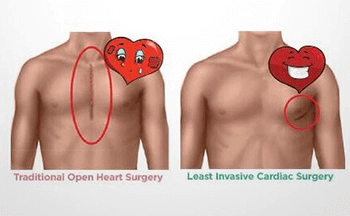
What is Cardiac LIS (Least
14 Jan 2015
We’ve
15 Sep 2014

The Center of
8 Jul 2014

Metabolic Syndrome A metabolic syndrome is
1 Jun 2016
Enquire Now