
Home/Wellness Zone/Sakra Blogs

19th May, 2026
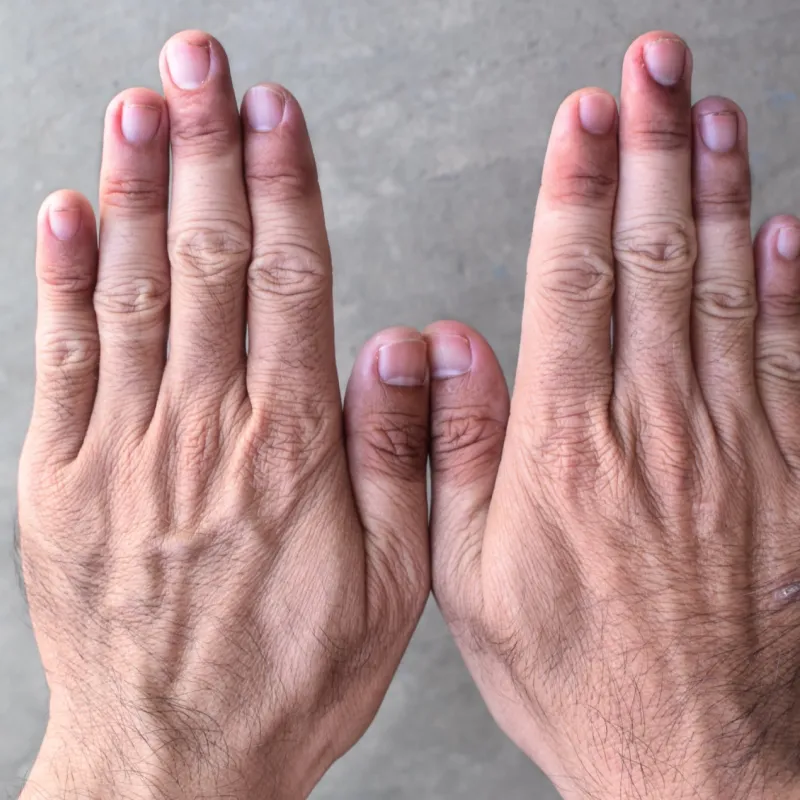
When someone suddenly notices their hands or feet turning blue for no reason, it can be alarming. This bluish skin tint is known as cyanosis. It happens when the blood does not carry enough oxygen, causing the skin, lips, tongue, or extremities to appear blue or purple. While mild cases may occur in cold weather or poor circulation, persistent cyanosis symptoms can signal a serious underlying condition, especially related to the heart or lungs.
Understanding what cyanosis is, why it happens, and when to seek medical care can make a big difference in managing health and preventing complications.
Cyanosis is a physical sign that the oxygen level in the blood has dropped below normal. When tissues do not get enough oxygen, deoxygenated hemoglobin builds up in the bloodstream, giving the skin a bluish tint.
Cyanosis can appear:
Only in the extremities (hands, feet, fingers, toes)
Around the lips and tongue
All over the body in severe cases
This condition is not a disease by itself. It is a warning sign of an underlying medical issue that needs attention.
There are two main types of cyanosis, and understanding the difference helps identify the possible causes:
This type affects the whole body. The bluish coloration especially appears around the lips, tongue, nose, and mucous membranes. It usually indicates a serious heart or lung issue.
Common reasons include:
Congenital heart defects
Severe pneumonia
Pulmonary embolism
Respiratory failure
Cyanosis limited to hands, feet, fingers, or toes is usually caused by poor circulation rather than low oxygen in the entire body.
Triggers include:
Exposure to cold
Raynaud’s disease
Blood clots in the limbs
Low blood pressure
Peripheral artery disease
Some people may only notice a bluish skin tint, but others may experience additional symptoms depending on the underlying cause. Common cyanosis symptoms include:
Bluish or purple discoloration of lips, tongue, hands, feet, or nails
Shortness of breath
Chest pain or palpitations
Fast breathing
Fatigue or weakness
Cold hands and feet
Confusion or dizziness in severe cases
If cyanosis appears suddenly along with breathing difficulty or chest pain, it should be treated as a medical emergency.
Seeing hands turning blue for no reason can be confusing. In most cases, it is caused by reduced blood flow to the extremities. Blood vessels become narrower due to cold exposure or pressure, limiting oxygen supply. However, if this continues even in warm conditions, it may point to an underlying problem such as vascular disease, heart disease, or lung dysfunction.
Doctors use both physical examination and medical tests to identify the cause. To understand how to check cyanosis, specialists may perform:
Observation of lips, tongue, nails, and extremities
Pulse oximetry to measure oxygen saturation
Blood gas analysis
Chest X-ray
Echocardiography for heart function
CT scan to detect blood clots or lung issues
Blood tests to check hemoglobin levels
There is no single cyanosis treatment, because the condition is only a sign of an underlying problem. Treatment depends on the cause and usually involves restoring oxygen supply to the blood and tissues.
Treatment options may include:
Oxygen therapy to increase oxygen saturation
Medications to treat heart failure, lung infection, blood clots, or circulatory problems
Warming of extremities if cold exposure is the trigger
Surgery for structural heart defects or major blockages
Ventilator support in cases of respiratory failure
If cyanosis appears in infants, especially around the mouth and tongue, immediate medical attention is necessary.
Seek medical care right away if:
Cyanosis appears suddenly
It is accompanied by breathing trouble or chest pain
Symptoms get worse during physical activity
A newborn shows bluish skin around the mouth or tongue
Timely treatment can prevent complications such as organ failure or permanent tissue damage.
Cyanosis is more than just a change in skin color. It is the body’s way of signaling that the tissues are not getting enough oxygen. While temporary blue skin from cold weather can be harmless, persistent cyanosis symptoms may indicate serious heart or lung conditions. If someone notices their hands turning blue for no reason, or bluish lips and tongue, seeking medical attention is important. Early diagnosis and proper cyanosis treatment help restore oxygen levels and protect overall health.
1. Can anxiety cause cyanosis?
Severe anxiety can lead to rapid breathing, which may lower oxygen levels temporarily, but it rarely causes true cyanosis.
2. Is cyanosis painful?
Cyanosis itself is not painful, but the underlying condition (like poor circulation or heart disease) may cause discomfort.
3. Can dehydration lead to cyanosis?
Severe dehydration may lower blood pressure and circulation, contributing to peripheral cyanosis.
4. Do babies get cyanosis?
Yes. A bluish mouth or tongue in newborns may indicate congenital heart disease and requires urgent evaluation.
5. Can cyanosis go away on its own?
Cyanosis caused by cold exposure or temporary circulation issues may disappear after warming up. Persistent cases need medical treatment.

Left bundle branch block
3 Sep 2026

The heart is a
10 Aug 2026

Triple Vessel Disease (TVD)
10 Aug 2026

Many everyday habits may seem
8 Jun 2026
When someone suddenly notices
19 May 2026

An arrhythmia happens when
19 May 2026

Feeling tired after a long
19 May 2026

Sleep is not just
24 Mar 2026

Heart disease doesn’t usually
6 Mar 2026

Chest pain is one
6 Mar 2026

Heart failure affects
1 Dec 2025

Heart disease doesn’t usually
1 Dec 2025

Chest pain is one
1 Dec 2025

Feeling a tight sensation in
30 Jul 2025

The terms heart rate and
30 Jul 2025
Heart-related conditions are on the
23 Jun 2025

When it comes to protecting
23 Jun 2025
Coronary Artery Disease occurs when
23 Jun 2025

Heart disease doesn’t happen overnight—and
23 Jun 2025

A heart transplant is a
12 May 2025

HF is the inability of
7 Aug 2024

Heart failure is a serious
6 May 2024

Cardiac arrest is a sudden
6 May 2024
In the realm of chronic
6 May 2024

A heart attack, also known
6 May 2024
The human heart is a
15 Mar 2024

In the realm of advanced
12 Mar 2024

A diagnosis of heart failure
12 Mar 2024
The aorta, the largest artery
25 Aug 2023

A healthy heart is essential
23 Aug 2023

Understanding Heart Failure Heart failure is
14 Aug 2023

Beriberi is also known as
28 Apr 2022

Atrial Fibrillation is a condition
9 Jun 2021

Making resolutions every New Year
17 Jun 2020

Smoking: Should I Use Nicotine
13 Jan 2020

Traveling And Driving After A
10 Jan 2020

Metabolic Syndrome A metabolic syndrome is
10 Jan 2020
Coronary angioplasty has evolved over
9 Jan 2019

Aortic valve surgery is one
27 Nov 2018

What is Coronary Angiography? Coronary angiography
10 Dec 2016

What is a Heart
10 Dec 2016
What is Unstable Angina? Unstable angina
10 Dec 2016

What is Angina? Angina is the
10 Dec 2016

Dr. Jagdish from
9 Jul 2016

Trans fat raises
9 Oct 2015

The first hour
6 Oct 2015

Protecting your heart
25 Sep 2015
Are
24 Feb 2015
What is Cardiac LIS (Least
14 Jan 2015

We’ve
15 Sep 2014

The Center of
8 Jul 2014

Metabolic Syndrome A metabolic syndrome is
1 Jun 2016
Enquire Now