
Home/Wellness Zone/Sakra Blogs

10th Aug, 2026
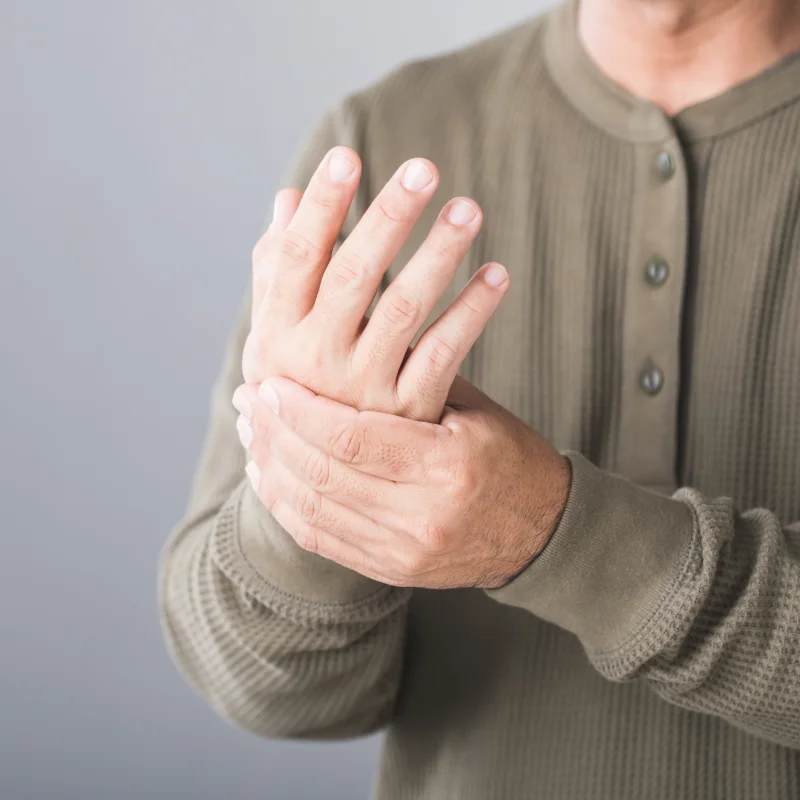
Tingling is a very common symptom, often described as ‘pins and needles,’ prickling, crawling, buzzing or burning over the skin. It most commonly affects the hands, feet, arms or legs, although it can occur anywhere in the body.
Most of us have experienced temporary tingling - for example, after sitting with the legs crossed for too long or sleeping with an arm underneath the body. This usually settles within a few minutes after changing position.
However, tingling that persists, keeps recurring, gradually worsens, or is accompanied by numbness, weakness or difficulty walking may indicate an underlying problem involving the nerves, spinal cord or brain and should be evaluated.
The medical term commonly used for tingling is paresthesia. It refers to an abnormal sensation occurring without an obvious external stimulus.
People describe it differently. It may feel like pins and needles, prickling or crawling, buzzing or electric sensations, burning, or numbness and reduced sensation.
The pattern of tingling often gives an important clue to its cause. For example, tingling affecting both feet may have a very different cause from tingling affecting only the thumb and first two fingers of one hand.
Tingling may occur by itself or along with other neurological symptoms.
Numbness: Reduced ability to feel touch, pain or temperature
Burning: Particularly common in some forms of peripheral neuropathy
Pain: This may be sharp, shooting or electric in character
Weakness: Difficulty gripping objects, lifting the foot or moving a limb normally
Increased sensitivity: Even light touch may occasionally feel uncomfortable or painful
Balance problems: Numbness involving the feet can make walking less steady
Loss of coordination: Fine movements of the hands may become difficult if sensation is significantly affected
The presence of weakness, difficulty walking or loss of bladder or bowel control along with tingling requires particular attention.
There is no single test for tingling because tingling itself is a symptom, not a disease. The most important part of the evaluation is understanding its pattern.
A doctor may ask where the tingling started, whether it is on one side or both sides, whether it is constant or intermittent, whether a particular posture triggers it, whether there is associated numbness, pain or weakness, whether walking or balance is affected, and whether the patient has diabetes or is taking medications that can affect nerves.
A neurological examination assesses sensation, muscle strength, reflexes, coordination and walking. Depending on the suspected cause, further investigations may include blood tests, nerve conduction studies or MRI. Not everyone with tingling requires an MRI or nerve conduction study; investigations should be selected according to the clinical pattern.
Treatment should be directed primarily at the underlying cause rather than the tingling itself.
Better blood sugar control may help prevent progression of diabetic neuropathy. Vitamin B12 deficiency can be corrected when confirmed. Nerve compression may improve with posture modification, splints, physiotherapy or other treatment. Problems involving the spine may require medication, physiotherapy and occasionally surgical evaluation. Certain neuropathies may require specific neurological or immunological treatment.
An occasional episode of pins and needles after sitting or sleeping awkwardly usually does not require medical evaluation.
Consult a doctor if tingling persists for several days or weeks, keeps recurring without an obvious reason, gradually worsens, is associated with persistent numbness or weakness, affects walking or balance, is associated with significant neck or back pain, or begins after starting a new medication or treatment.
Seek urgent medical attention if tingling or numbness develops suddenly, particularly when accompanied by weakness of the face, arm or leg; facial drooping; difficulty speaking or understanding speech; sudden difficulty walking or severe imbalance; loss of bladder or bowel control; or severe weakness involving the arms or legs. These symptoms can indicate conditions such as stroke or significant spinal cord compression, where early treatment can be crucial.
Not every cause of tingling can be prevented, but maintaining good general and nerve health can reduce the risk of some conditions. Useful measures include keeping diabetes well controlled, eating a balanced diet, avoiding excessive alcohol consumption, exercising regularly, maintaining a healthy body weight, avoiding prolonged awkward postures, using appropriate ergonomics during prolonged computer or desk work, and seeking medical attention for persistent symptoms rather than repeatedly self-medicating with vitamins or painkillers.
If tingling is caused by a chronic neurological condition, treatment may focus on controlling symptoms and preventing further nerve damage. Take prescribed medication regularly, remain physically active as advised, and attend follow-up appointments when required. Patients with significant numbness of the feet should also take additional care to inspect their feet regularly for cuts, burns or injuries, particularly if they have diabetes. Reduced sensation can sometimes allow an injury to go unnoticed.
The outlook depends entirely on the cause. Temporary tingling caused by pressure on a nerve usually resolves completely. Tingling caused by vitamin deficiency or some forms of nerve compression may improve significantly once the underlying problem is treated. When tingling results from chronic nerve damage, complete recovery may not always be possible. However, identifying the cause early can help prevent progression and improve symptom control.
Tingling or ‘pins and needles’ is extremely common and, in most situations, is not a cause for alarm. What matters is the pattern and persistence of the symptom. Tingling that occurs briefly after sitting or sleeping in an awkward position is usually harmless. In contrast, tingling that persists, repeatedly returns, progresses, or occurs along with numbness, weakness, imbalance or other neurological symptoms deserves medical evaluation. Rather than simply treating the sensation, the aim should always be to identify why it is happening and treat the underlying cause.
1. What are the early symptoms of nerve-related tingling?
Pins and needles, burning, prickling and mild numbness are common symptoms. The distribution and progression of these symptoms are often more useful than their severity in identifying the cause.
2. Is tingling always a sign of nerve damage?
No. Temporary pressure on a perfectly healthy nerve can produce tingling. Persistent or recurrent tingling, however, may indicate nerve irritation or damage and should be evaluated.
3. Can tingling go away on its own?
Yes. Tingling caused by temporary nerve pressure usually disappears within minutes after changing position. Persistent tingling depends on the underlying cause.
4. Does every patient with tingling need an MRI?
No. Many patients do not require imaging. MRI is generally considered when the history and neurological examination suggest a problem involving the brain, spinal cord or nerve roots.
5. Should I take vitamin B12 for tingling?
Vitamin B12 deficiency can cause tingling, but it is only one of many possible causes. Persistent symptoms should be evaluated rather than routinely taking vitamin supplements without identifying the cause.
6. When should tingling be considered an emergency?
Sudden tingling or numbness associated with weakness, facial drooping, speech difficulty, severe imbalance, or bladder or bowel dysfunction requires urgent medical assessment.

Tingling is a very common
10 Aug 2026

Neck pain is extremely common
10 Aug 2026

Numbness is a common neurological
10 Aug 2026
A cervicogenic headache is
8 Jun 2026

Your brain communicates through
21 May 2026

Your body movements are
21 May 2026

Your eyes and brain
21 May 2026
Every year, more people
5 Mar 2026

Parkinson’s disease is
19 Jan 2026
Headaches are one of
5 Jan 2026

Memory is an essential
5 Jan 2026
Obstructive sleep apnea is a
17 Nov 2025

Stroke is a leading
21 Oct 2025
When we think of
21 Oct 2025
Have you ever noticed
14 Oct 2025

Parkinson’s disease (PD) is a
19 Aug 2025
Stroke is a major public
12 Aug 2025

What if a paralysed person
15 Jul 2025

Parkinson’s disease is a long-term
11 Jul 2025

Parkinson's disease is a neurological
11 Jul 2025
Headaches are one of the
10 Jul 2025
Migraines are more than just
9 Jul 2025

Every year, May Stroke Awareness
13 May 2025

A stroke is a medical
22 Oct 2024
A brain stroke, often referred
22 Oct 2024
A hemorrhagic stroke Stroke caused
6 Oct 2024

A stroke can happen suddenly,
6 Oct 2024
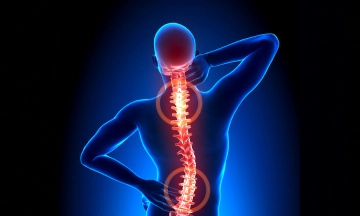
Scoliosis is a lateral curvature
5 Aug 2024
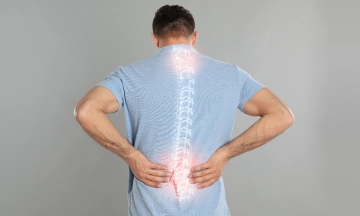
The human spine, comprising 33
5 Aug 2024
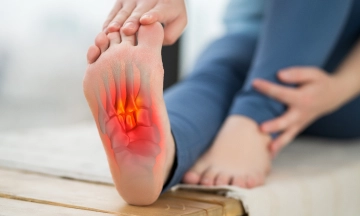
Plantar fasciitis is a common
7 Feb 2024

Pregnancy is a transformative journey.
7 Feb 2024
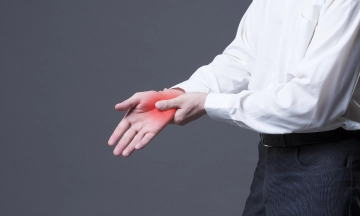
Carpal tunnel syndrome (CTS) is
7 Feb 2024

Epilepsy, a central nervous system
9 Jun 2021

Post-pandemic life has compelled us
22 Dec 2020
A stroke can happen to
29 Oct 2020
What is a Stroke? Stroke is
9 Nov 2017
A pituitary adenoma
12 Jan 2015
Craniosynostosis is derived
28 Nov 2014
Enquire Now