

Home/Wellness Zone/Sakra Blogs

8th Jun, 2026

Shoulder pain often becomes more noticeable at night because the body stays in one position for a long time. Poor posture while sleeping can increase pressure on the shoulder joint and also affect the neck. Choosing the right sleeping position helps reduce pain, improve blood flow, and support muscle recovery. Below are the best and most practical sleeping positions explained in detail with proper guidance.
Sleeping on your back is one of the safest and most effective ways to reduce pressure on the shoulders. This position allows your body weight to be evenly distributed, which helps prevent strain on a single shoulder.
Benefits of sleeping on your back:
Reduces pressure on both shoulders equally
Keeps spine and neck in a neutral, relaxed position
Helps reduce stiffness and morning pain
Supports natural body alignment during sleep
How to do it correctly:
Use a small pillow under your neck for proper support
Keep both arms relaxed alongside your body
Place a soft pillow under the painful arm for comfort
Avoid lifting shoulders upward while lying down
This is widely considered the best sleeping position for shoulder pain because it avoids direct compression on the affected joint.
Side sleeping is comfortable for many people, but it should be done carefully when shoulder pain is present. You should always sleep on the opposite side of the pain to avoid worsening symptoms.
Benefits of this position:
Prevents direct pressure on the painful shoulder
Can improve comfort for people who cannot sleep on their back
Helps maintain a natural sleeping posture when supported properly
How to sleep correctly on your side:
Place a pillow in front of your chest to support the upper arm
Keep the painful shoulder slightly forward, not pressed backward
Use a pillow between your knees for spinal alignment
Avoid curling too tightly, as it increases muscle tension
This position is useful in managing the sleeping position for shoulder pain when back sleeping feels uncomfortable.
A slightly raised upper body position can be helpful when flat sleeping increases pain. This position reduces pressure on the shoulder and helps muscles stay relaxed.
Benefits of this position:
Reduces strain on the shoulder joint
Helps improve comfort in cases of inflammation
Supports easier breathing and relaxation
How to use this position:
Use 2–3 pillows or a wedge pillow to elevate the upper body
Keep the back supported evenly without twisting
Place arms on pillows to avoid pulling the shoulder muscles
Avoid leaning more on one side
This can be a good option for people struggling with sleeping position for neck and shoulder pain together.
Arm positioning plays a key role in reducing shoulder discomfort. Without support, the arm can pull the shoulder downward and increase pain during the night.
Why arm support matters:
Reduces stress on shoulder muscles
Prevents pulling of the rotator cuff
Helps muscles stay relaxed during sleep
How to support your arm properly:
Place a pillow under the arm when sleeping on your back
Hug a pillow while side sleeping for support
Avoid letting the arm hang off the bed
Keep the shoulder relaxed and not lifted
This is very helpful for people trying to understand how to sleep with shoulder pain comfortably.
Sleeping directly on the painful shoulder increases pressure and slows down healing. It can also make pain worse in the morning.
Negative effects of sleeping on the shoulder:
Increases inflammation and discomfort
Reduces blood flow to the affected area
Causes stiffness after waking up
It can worsen existing injuries over time
Better alternatives:
Sleep on your back or non-painful side
Use pillows to prevent rolling onto the painful shoulder
Adjust mattress and pillow support for better alignment
Avoiding sleeping on the side with shoulder pain is very important for recovery.
Sleeping on the stomach places the body in an unnatural position, especially for the neck and shoulders. It can lead to long-term discomfort.
Problems with this position:
Forces the neck to turn to one side
Increases pressure on both shoulders unevenly
Strains muscles and joints over time
Leads to morning stiffness and pain
Better option:
Gradually shift to back sleeping
Use pillows to prevent rolling onto your stomach
This position is not recommended for sleeping position for neck pain or shoulder issues.
The right pillow supports the natural curve of the neck and reduces stress on the shoulders. Poor pillow support can worsen pain even if posture is correct.
What to look for in a pillow:
Medium firmness for balanced support
Proper height to keep the neck aligned with the spine
Memory foam or orthopedic support design
Avoid overly soft or too high pillows
Helpful tips:
Replace old pillows that lose shape
Use extra-small pillows for arm or shoulder support
Good pillow support plays a major role in the sleeping position for neck and shoulder pain relief.
A supportive mattress helps distribute body weight evenly and reduces pressure points on the shoulder.
Ideal mattress features:
Medium-firm surface for balanced support
Even pressure distribution across the body
Proper spinal alignment support
What to avoid:
Very soft mattresses that sink too much
Very hard surfaces that increase pressure points
A good mattress improves overall comfort and supports a better sleeping position for shoulder pain.
Good sleep posture alone is not enough. Daily habits also play an important role in reducing shoulder pain.
Helpful habits include:
Gentle shoulder stretching during the day
Applying a warm compress before sleeping
Avoiding heavy lifting or sudden movements
Maintaining correct posture while sitting
Staying active to prevent stiffness
These habits support better results, along with a proper sleeping position for shoulder pain.
The right sleeping position can significantly reduce shoulder pain and improve sleep quality. Sleeping on your back or on the non-painful side with proper support is usually the best approach. Avoiding sleeping on shoulder pain and stomach sleeping is equally important. Along with correct posture, proper pillow use, mattress support, and healthy daily habits, all work together to improve comfort. If pain continues despite these changes, medical evaluation is recommended to rule out underlying shoulder or neck conditions.
1. What is the best sleeping position for shoulder pain?
Sleeping on your back is generally the best option as it reduces pressure and supports proper alignment.
2. Can sleeping position cause shoulder pain?
Yes, poor posture or sleeping on the painful side can increase strain and worsen symptoms over time.
3. How to sleep with shoulder pain comfortably?
Use pillow support under the arm, avoid sleeping on the painful side, and maintain a neutral spine position.
4. Is side sleeping good for shoulder pain?
Yes, but only on the non-painful side with proper pillow support for alignment and comfort.
5. Does sleeping position affect neck pain too?
Yes, poor posture can worsen both shoulder and neck pain, especially without proper pillow support

Shoulder pain often becomes more noticeable at night because the body stays in one position for a long time. Poor posture while sleeping can increase pressure on the shoulder joint and also affect the neck. Choosing the right sleeping
8 Jun 2026

Frozen shoulder, medically known as adhesive capsulitis, is a condition that causes pain, stiffness, and gradual loss of movement in the shoulder joint. It develops slowly over time and can significantly affect daily activities such as lifting the arm,
8 Jun 2026

A dislocated shoulder happens when the upper arm bone comes out of the shoulder socket. Because the shoulder is one of the most mobile joints in the body, it is also one of the easiest to dislocate. A shoulder
11 Mar 2026

Back pain is one of the most common health issues affecting people across all age groups. It can feel like a dull ache, a sharp stab, or a persistent stiffness that limits your movement. Lower back pain is especially
13 Oct 2025
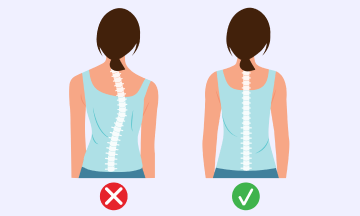
Scoliosis is a spinal condition that causes an abnormal sideways curvature of the spine. It can lead to discomfort, muscle imbalances, reduced mobility, and sometimes visible postural changes. While medical treatment and monitoring by professionals are essential, especially for moderate
19 May 2025
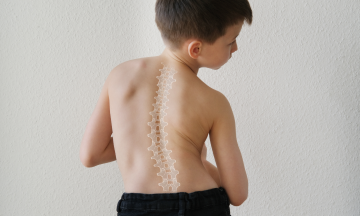
Scoliosis is a condition where the spine curves sideways, often resembling an “S” or “C” shape when viewed from behind. While mild scoliosis may not cause major problems, undiagnosed or untreated scoliosis can lead to chronic pain, posture issues, and
19 May 2025
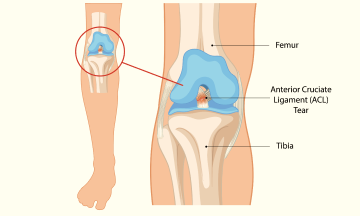
Ligament injuries, especially to the ACL, can be debilitating, often requiring surgical intervention. While traditional reconstruction methods use autografts or allografts, synthetic ligaments are emerging as a promising alternative. These advanced materials offer new possibilities for faster recovery and long-term
19 Feb 2025
Knee replacement surgery has come a long way over the past few decades, with advancements in technology significantly improving patient outcomes. One of the most groundbreaking innovations in recent years is the use of active robotics in knee replacement procedures.
17 Feb 2025
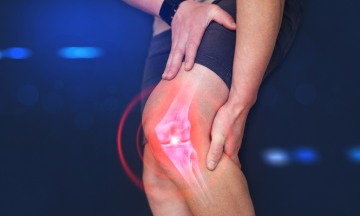
Knee ligament injuries are common among athletes and active individuals. The knee has four major ligaments: the anterior cruciate ligament (ACL), posterior cruciate ligament (PCL), medial collateral ligament (MCL), and lateral collateral ligament (LCL). These ligaments provide stability to the
17 Feb 2025

Maintaining good posture while working at a desk is essential for preventing neck, back, and shoulder pain. Spending hours hunched over a desk or slumping in a chair can lead to poor posture habits, which may eventually cause discomfort and
13 Nov 2024

Shoulder pain is a common issue affecting people of all ages. Our shoulders play a critical role in nearly every daily activity, from lifting objects to reaching overhead. However, due to their flexibility and frequent use, shoulders are vulnerable to
13 Nov 2024

Shoulder injuries are common in over overhead sports like Badmitton , tennis , throw ball, volley ball, jawline throw base ball and cricket and also in high impact sports like hockey foot ball , judo , karate , kungfu and
16 Sep 2024
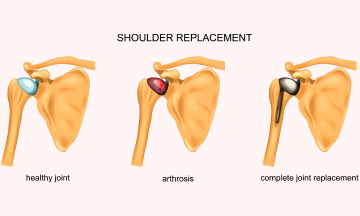
Shoulder arthroplasty, also known as shoulder replacement surgery, is a procedure where a damaged or arthritic shoulder joint is replaced with an artificial joint made of metal and plastic components. The goal is to alleviate pain, restore mobility, and improve
16 Sep 2024
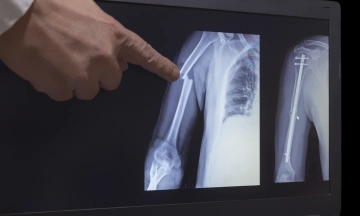
A hairline fracture, also known as a stress fracture, is a tiny crack in a bone that often results from repetitive force or overuse. Unlike acute fractures caused by sudden trauma, hairline fractures develop gradually over time, making them sometimes
23 Jul 2024

A rotator cuff is a group of muscles and tendons that attach the shoulder blade to the upper arm bone and help to stabilize the shoulder joint. A rotator cuff tear is a common injury that occurs when one or
20 Apr 2023
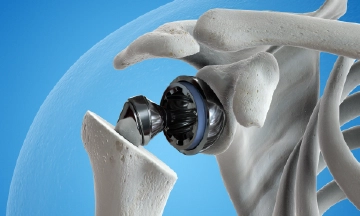
Shoulder replacement surgery, also known as shoulder arthroplasty, is a surgical procedure to replace the damaged parts of the shoulder joint with artificial components, typically made of metal, plastic, or ceramic. The shoulder joint is a ball-and-socket joint, where the
15 Mar 2023

Bengaluru, December 13, 2020:Sakra World Hospital is one of the leading healthcare providers in Bengaluru and India’s first FDI hospital to bring the country's one of its kind healthcare breakthrough - CUVIS Joint. It is an advanced robotic knee replacement
7 Jun 2021
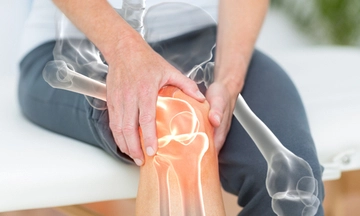
Importance of the Knee Joint The knee is one of the important joints in the body because it carries the weight of the human being but is also important for sporting activities. So in the knee, there are structures like meniscus
6 Nov 2020
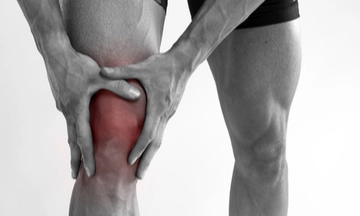
There are a subset of patients suffering from arthritis pain and also suffering from ligamentous meniscal injuries, who have to put the surgeries forward due to the COVID. There are a lot of people who are suffering from immense pain, they
6 Nov 2020

Question: I haven’t been injured but I have shoulder pain when I raise my arm overhead. What could it be? This is one of the most common questions I come across in my clinical practice. The most common cause of the
24 Jan 2020
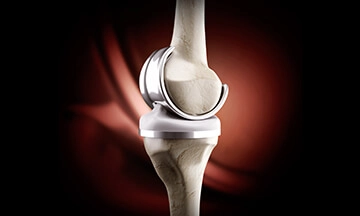
Medically known as adhesive capsulitis, frozen shoulder is a condition that severely limits your motions as the tissues in the shoulder joints become thicker with time & develop scar tissue. Frozen Shoulder Symptoms: Main Signs and Symptoms of Frozen Shoulder 1. Stiffness
23 Dec 2019

Medically known as adhesive capsulitis, frozen shoulder is a condition that severely limits your motions as the tissues in the shoulder joints become thicker with time & develop scar tissue. Frozen Shoulder Symptoms: Main Signs and Symptoms of Frozen Shoulder 1. Stiffness
23 Dec 2019
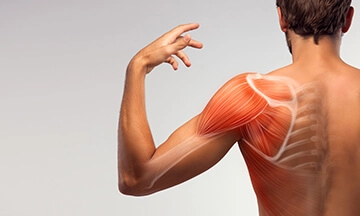
Living in pain can be excessively tolling not just on a person but also those around them. It ruins the spirit of life & puts a dark cloud over you. As much as it is advised to stay fit as
23 Dec 2019

Overview of treatment options for Shoulder Impingement Also known as Subacromial Impingement Painful Arc Syndrome or Rotator Cuff Tendinitis Shoulder Impingement is one of the most common causes of shoulder pain caused due to repetitive compression or "impingement" of rotator cuff
23 Dec 2019

There are a variety of ways you can injure your rotator cuff; from a fall or accident heavy lifting or swinging motion or deterioration of the muscle & ligament from ageing. In case of a complete tear in the rotator
23 Dec 2019

If you've been around athletes, you may have heard them grumbling about a torn rotator cuff or constant shoulder pain. What does this really mean? The rotator cuff is a collection of four muscles & tendons around the shoulder joint.
23 Dec 2019

Simple activities like brushing hair or reaching for the shelf causing you severe shoulder pain? Unable to explain the pain in your shoulder? As age increases, our shoulders become more vulnerable to pain & injury. Sometimes shoulder pain is an indication
23 Dec 2019

The shoulder consists of several tendons, ligaments, & muscles making it flexible & giving it the strength to perform manoeuvres ranging from writing to lifting weights. Unfortunately, since the shoulder muscles are used regularly for all activities, shoulder pain is
23 Dec 2019

The group of muscles & tendons that surrounds the human shoulder joint & helps with the rotation of the arm is known as the rotator cuff. Most common injuries to the rotator cuff are due to repeated overhead movement of
23 Dec 2019
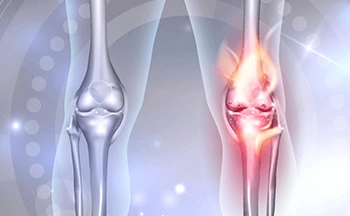
What is Meniscal transplant surgery? Replacing the missing or damaged meniscus with a meniscus from a cadaver donor or live amputee donor is called Meniscal transplant surgery. The surgery happens under anesthesia (General or Spinal or Epidural depending upon the patient’s
2 Jan 2019

Sakra World Hospital introduces Computer Navigated Partial Knee Replacement Surgery Only 7 Computer Navigated Partial Knee Replacement Surgeries have been performed till date in India and Sakra World Hospital is the first in South India and the only hospital other than
6 Sep 2016
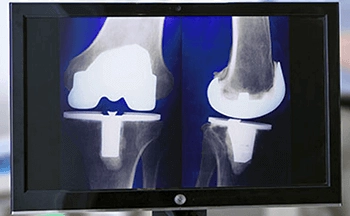
Total Knee Replacement (TKR) surgery has today become a commonly performed and highly successful surgical procedure. Recent innovations have resulted in further improvement in early and long-term surgical outcomes. New implant designs provide greater and more normal range
20 Jul 2016

The shoulder is a complex ball and socket joint that is able to move in many directions. With this great mobility comes a lack of stability. This lack of stability in the shoulder makes it susceptible to injury and pain.
8 Mar 2016
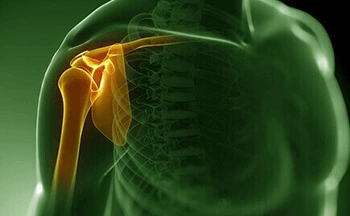
Shoulder joint complex is a combination of several joints that combine with tendons and muscles to allow a wide range of motion in the arm — from scratching your back to throwing a jawline. Any problem in the shoulder joint
6 Feb 2015
Enquire Now