
Home/Wellness Zone/Sakra Blogs

10th Mar, 2026

Urology robotic surgery is an advanced, minimally invasive surgical approach used to treat conditions affecting the urinary tract and male reproductive organs. In this technique, surgeons use a robotic-assisted system to perform delicate procedures with enhanced precision and control.
Although it is called robotic surgery, the system does not work independently. The urologist remains fully in control at all times, guiding the robotic instruments from a console. The technology provides a magnified 3D view of the surgical area and allows refined movements that are difficult to achieve with the human hand alone.
Robotic surgery is now widely used in urology because many urological organs are located in deep, narrow spaces within the pelvis and abdomen, where precision is essential.
Robotic technology is commonly used to treat several complex urological conditions.
Robotic prostatectomy is most often performed to treat prostate cancer. In this procedure, the prostate gland is removed while carefully preserving surrounding nerves that control urinary continence and sexual function.
Robotic assistance allows the surgeon to work with high precision in the confined pelvic space. Improved visualization and control help reduce blood loss and support better functional outcomes after surgery.
Robotic kidney surgery is typically performed to remove kidney tumors or treat other kidney disorders. Depending on the condition, the surgeon may remove only the tumor (partial nephrectomy) or the entire kidney (radical nephrectomy).
The robotic system helps preserve as much healthy kidney tissue as possible while accurately removing diseased areas. This precision is especially important when dealing with small or complex tumors.
Robotic bladder surgery is commonly used to treat bladder cancer or other serious bladder conditions. In some cases, part or all of the bladder may need to be removed.
Robotic assistance provides better visualization of delicate structures such as blood vessels and nearby organs. This can help reduce complications and improve surgical accuracy during reconstruction procedures.
Robotic-assisted urology procedures offer several important advantages.
While robotic urology surgery is generally safe, it still carries certain risks.
Eligibility for robotic urology surgery depends on several factors.
The decision is made after thorough consultation with a urologist.
Recovery varies depending on the type of procedure performed.
Urology robotic surgery represents a major advancement in the treatment of complex urinary and reproductive conditions. By combining surgical expertise with advanced robotic technology, it allows greater precision, smaller incisions, and potentially faster recovery. While not suitable for every patient, it has become a trusted and effective option for many urological procedures. A detailed consultation with a urologist can help determine whether robotic surgery is the right approach for your condition.
1. Is robotic urology surgery safe?
Robotic urology surgery is considered safe when performed by experienced surgeons. It offers improved precision while maintaining standard surgical safety protocols.
2. Does the robot perform the surgery independently?
The robotic system does not operate on its own. The surgeon controls every movement throughout the procedure.
3. Will recovery be faster than open surgery?
Many patients experience shorter hospital stays and quicker recovery compared to traditional open surgery.
4. Is robotic surgery only used for cancer?
While commonly used for cancers of the prostate, kidney, and bladder, it can also treat certain non-cancerous conditions.
5. Are complications common?
Complications are uncommon but possible, as with any surgery. Proper surgical expertise significantly lowers risk.

Director - Renal Transplant and Uro Oncology, Urology & Andrology
Book an Appointment
Dysuria, commonly known as
18 Jun 2026

Kidney stones are no
17 Jun 2026

Urology robotic surgery
10 Mar 2026

Benign Prostatic Hyperplasia (BPH), commonly
28 Feb 2025
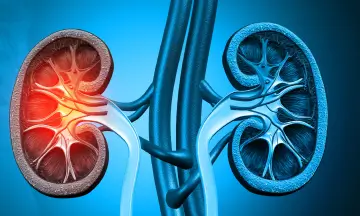
A donor nephrectomy is a
28 Feb 2025
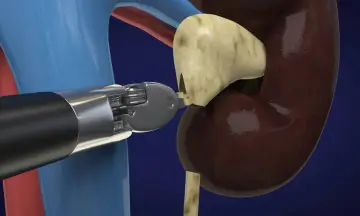
Robotic Pyeloplasty is an advanced,
27 Feb 2025

Partial nephrectomy is a
27 Feb 2025
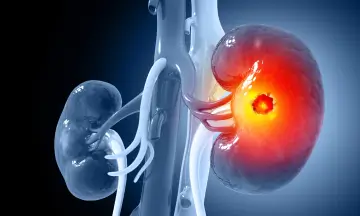
A kidney transplant is a
27 Feb 2025

Female incontinence, or the involuntary
15 Nov 2024

Uro cancer or more precisely
15 Nov 2024

Bladder cancer is one of
15 Nov 2024

Kidney cancer or renal cancer,
15 Nov 2024

Urinary Tract Infections (UTIs) are
9 Aug 2024
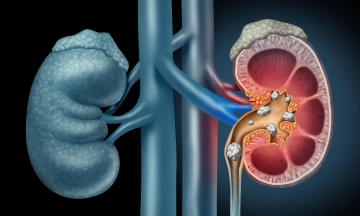
Kidney stones, solid deposits of
7 Aug 2024

The field of urology has
4 Jul 2024

Prostate health is a critical
4 Jul 2024
Prostate health is a critical
1 Jul 2024

The sudden onset of excruciating
12 Feb 2024

Bladder health is often taken
2 Nov 2023

In the realm of medical
11 Sep 2023

Advancements in medical technology and
11 Sep 2023

Erectile dysfunction is a medical
9 May 2023

Renal transplantation is a medical
4 May 2023

Prostate cancer refers to a
27 Mar 2023

Imagine the misery, a 13-year-old
20 May 2021
The kidneys are parts of
5 Feb 2019

Kidney Disease is often thought
14 Mar 2017

The kidneys are bean-shaped organs,
17 Jan 2017
Enquire Now