
Home/Wellness Zone/Sakra Blogs

7th Apr, 2026
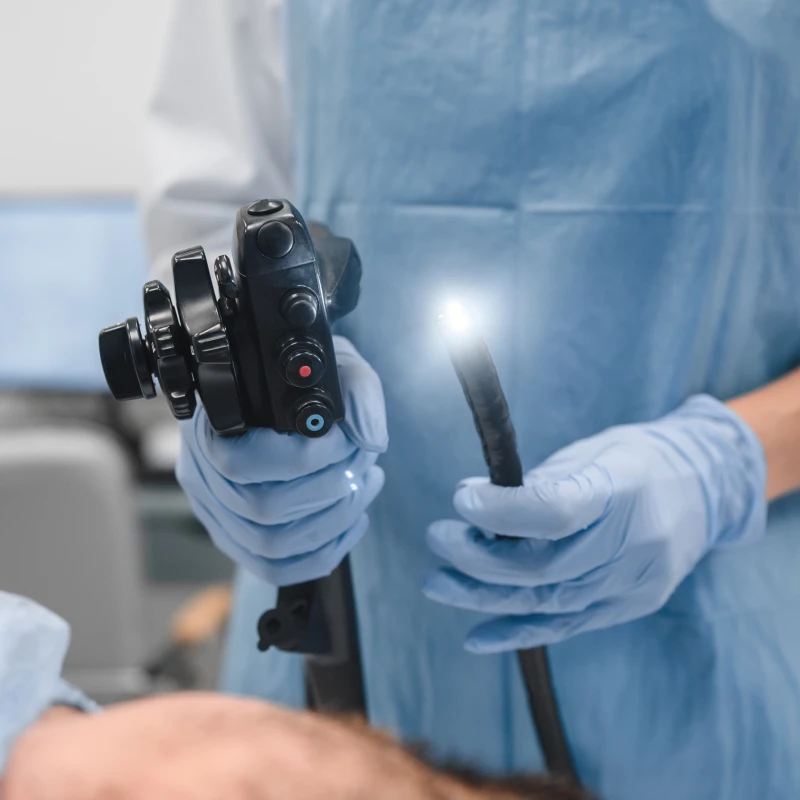
Digestive system disorders can range from mild conditions to complex diseases that require surgery. Traditionally, gastrointestinal (GI) surgery involved large abdominal incisions, longer hospital stays, and extended recovery periods. Today, robotic gastrointestinal surgery offers a minimally invasive alternative that allows surgeons to perform complex procedures with greater precision and control.
This advanced approach is increasingly used for treating cancers, hernias, gallbladder disease, and other digestive disorders. Here’s a detailed look at what robotic GI surgery involves, its benefits, and what patients can expect.
Robotic gastrointestinal surgery is a minimally invasive procedure performed using a robotic surgical system that is fully controlled by a trained surgeon.
The system consists of:
A surgeon’s console
Robotic arms holding delicate instruments
A high-definition 3D camera
The surgeon sits at a console and guides the robotic instruments in real time. The robotic arms translate the surgeon’s hand movements into precise micro-movements inside the abdomen. The 3D magnified view provides excellent visualization of tissues, blood vessels, and nerves.
It is important to understand that the robot does not operate independently. The surgeon is in complete control throughout the procedure.
Robotic techniques are used to treat a wide range of gastrointestinal conditions, including:
Colorectal cancer
Stomach cancer
Esophageal disorders
Gallbladder stones and infection
Abdominal and inguinal hernias
Inflammatory bowel disease
Rectal prolapse
Selected pancreatic and liver tumors
This approach is especially useful in complex pelvic or abdominal surgeries where precision is critical.
Robotic technology is widely used in several gastrointestinal operations, particularly when precision and minimal tissue damage are important.
Robotic Colectomy: This procedure involves removing part or all of the colon. It is commonly performed for colon cancer, large polyps, or severe inflammatory bowel disease.
Robotic Gastrectomy: Partial or complete removal of the stomach, often done for stomach cancer. The robotic system helps in careful lymph node removal and precise tissue dissection.
Robotic Hernia Repair: Robotic surgery allows accurate placement of mesh to repair abdominal wall hernias while minimizing tissue damage.
Robotic Cholecystectomy: Removal of the gallbladder in patients with gallstones or chronic infection. The robotic system offers enhanced visualization during delicate dissection.
Robotic Rectal Surgery: Used in rectal cancer treatment, especially in deep pelvic areas where precision is essential to protect nerves and surrounding organs.
Robotic gastrointestinal surgery offers several advantages compared to traditional open surgery:
Smaller Incisions: Small cuts instead of a large abdominal incision reduce muscle damage and promote faster healing.
Less Blood Loss: Precise instrument control helps minimize injury to blood vessels during surgery.
Reduced Risk of Infection: Smaller wounds lower the chances of surgical site infections.
Less Post-Operative Pain: Minimal tissue disruption often leads to reduced pain and decreased need for strong pain medications.
Shorter Hospital Stay: Many patients are discharged earlier due to smoother recovery.
Faster Return to Normal Activities: Reduced surgical trauma allows patients to resume light activities sooner.
Better Precision: The 3D magnified view helps surgeons remove tumors accurately while preserving healthy tissue.
Improved Access to Difficult Areas: Robotic instruments can rotate and bend more freely, making it easier to operate in narrow or deep spaces such as the pelvis.
Although robotic GI surgery has many benefits, it is still a major surgical procedure and carries certain risks:
Bleeding
Infection
Injury to nearby organs
Leakage at intestinal connection sites (anastomotic leak)
Reaction to anesthesia
Rare need to convert to open surgery
Robotic GI surgery may be suitable for patients who:
Have early to moderate-stage gastrointestinal cancers
Need complex pelvic or abdominal surgery
Are medically stable for minimally invasive procedures
Do not have extensive scar tissue from previous surgeries
However, patients with advanced disease, emergency conditions, or severe medical complications may require traditional open surgery. The final decision is made after thorough evaluation, imaging tests, and surgical consultation.
Recovery depends on the type of surgery and the patient’s overall health.
Hospital Stay: Typically 2 to 5 days for many GI procedures.
First Week: Patients are encouraged to walk early to prevent complications such as blood clots.
2–3 Weeks: Light daily activities can usually be resumed.
4–6 Weeks: Gradual return to normal routine and work, depending on the complexity of the surgery.
Proper nutrition, wound care, and follow-up visits are essential for smooth recovery.
Robotic gastrointestinal surgery represents a significant advancement in digestive system care. By combining surgical expertise with advanced robotic technology, it allows complex procedures to be performed with enhanced precision through small incisions.
While not suitable for every patient, it offers clear benefits for many individuals requiring abdominal or pelvic surgery. A detailed consultation with a gastrointestinal surgeon is essential to determine the most appropriate and safest treatment approach.
1. Is robotic gastrointestinal surgery safe?
Yes. When performed by experienced surgeons, it is considered safe and effective for appropriate candidates.
2. Does the robot perform the surgery independently?
No. The surgeon controls every movement. The robotic system does not act on its own.
3. Is robotic surgery better than laparoscopic surgery?
In some complex cases, robotic surgery provides improved precision and flexibility. However, the choice depends on the patient’s condition.
4. Will I have large scars?
No. Robotic surgery uses small incisions, resulting in minimal visible scarring.
5. Is recovery faster compared to open surgery?
In many cases, yes. Patients often experience less pain and shorter hospital stays.

Senior Consultant & Lead – General Surgery, Laparoscopic & Robotic Surgery
Book an Appointment
Nipple discharge is a condition where fluid comes out of one or both nipples, either on its own or when pressure is applied. While it can be alarming, especially if unexpected, not all cases are serious. Many people often
7 Jul 2026

Breast pain is one of the most common concerns women experience at some point in their lives. It can feel mild, sharp, heavy, or even constant, which often leads to worry. Many people frequently ask questions like why breast
7 Jul 2026
The thyroid is a small, butterfly-shaped gland located at the front of the neck. It plays an important role in controlling metabolism, heart rate, energy levels, and body temperature. When thyroid problems cannot be managed with medicines alone, doctors
12 Jan 2026

A hernia happens when an internal organ or tissue pushes through a weak spot in the muscle or surrounding tissue. It often appears as a visible bulge and may cause discomfort, especially while lifting, coughing, or standing for long
12 Jan 2026
Enquire Now