
Home/Wellness Zone/Sakra Blogs

7th Jul, 2026
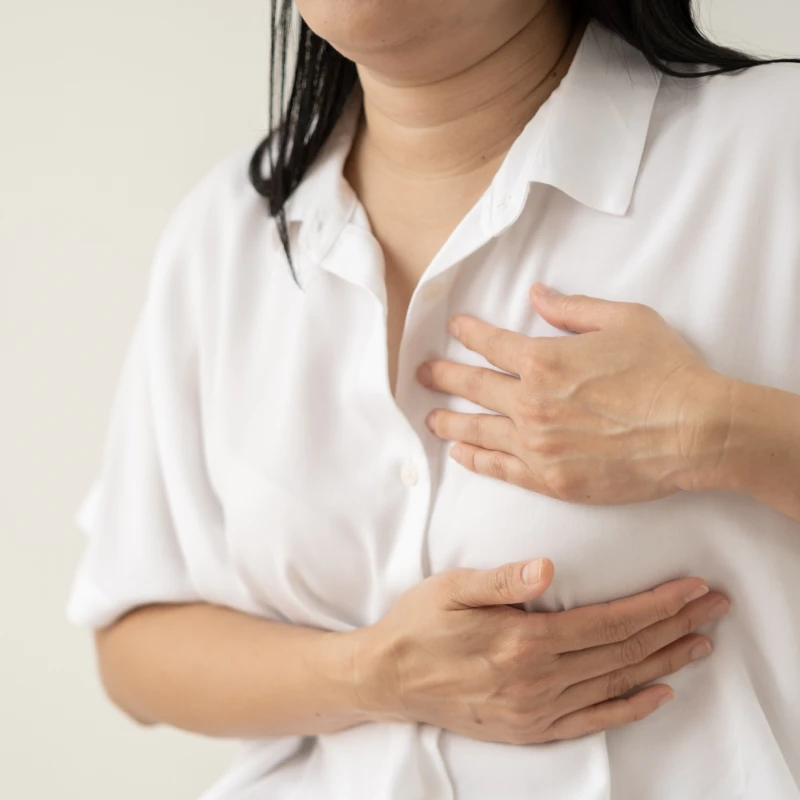
Breast pain is one of the most common concerns women experience at some point in their lives. It can feel mild, sharp, heavy, or even constant, which often leads to worry. Many people frequently ask questions like why breast pain happen, why does my breast pain, or feel confused when they experience a breast heavy and painful sensation without any clear reason.
The reassuring part is that most breast pain is not serious and is rarely linked to cancer. Still, understanding the condition helps reduce anxiety and ensures timely care when needed.
Breast pain, medically known as mastalgia, refers to any kind of discomfort, tenderness, or pain in the breast region. It may occur in one breast or both and can vary in intensity.
Some women describe it as:
A dull ache
A sharp or burning pain
A tight or stretching feeling
A heavy breast pain sensation
A feeling of pain in my breast that comes and goes
It may also extend to the underarm area and sometimes interfere with daily activities like sleeping or exercising.
Understanding the type of breast pain is important because it helps identify the underlying cause.
1. Cyclical Breast Pain
This is the most common type and is related to hormonal changes during the menstrual cycle.
Features include:
Occurs before periods
Affects both breasts
Causes swelling, tenderness, and heaviness
Often described as breast heavy and painful
Usually improves after menstruation
2. Non-Cyclical Breast Pain
This type is not linked to periods and can occur at any time.
Features include:
May affect one breast
Sharp, burning, or stabbing pain
Localized discomfort
Persistent pain in my breast
3. Extramammary Pain
This pain does not originate from the breast itself but from surrounding structures like muscles, ribs, or chest wall.
Features include:
Feels like breast pain but originates elsewhere
May worsen with movement or pressure
Symptoms of breast pain can vary depending on the cause, intensity, and individual factors. Common signs include:
Tenderness when touched – The breast may feel sore or sensitive even with light pressure, making daily activities like dressing or sleeping uncomfortable.
Swelling or fullness – You may notice a sense of heaviness or slight enlargement in the breast, often linked to hormonal changes.
Burning or sharp pain – Some people experience sudden, intense pain that feels like a burning or stabbing sensation in a specific area.
Tightness or pressure – The breast may feel stretched, tight, or under pressure, as if the tissue is being pulled or compressed.
Pain spreading to the armpit – Discomfort can extend beyond the breast to the underarm area due to shared nerve pathways.
Feeling of heaviness or fullness – A common complaint where the breast feels weighed down, especially before periods.
A heavy and painful sensation in the breast – Many describe this as a dull, persistent ache combined with a feeling of increased weight in the breast.
Intermittent or constant pain in my breast – Pain may come and go at certain times (intermittent) or remain steady throughout the day (constant).
Pain linked to timing – Symptoms may appear at specific times, such as before menstruation, during pregnancy, or after physical activity. Tracking this pattern can help understand why does my breast pain at certain times.
Keeping note of these symptoms and their timing can help identify patterns and guide proper diagnosis and treatment.
There are many reasons behind breast pain. Most are harmless and manageable.
High caffeine intake
Fat-rich diet
Smoking
Stress
If the pain is persistent, severe, or feels unusual, it is important to consult a doctor for proper evaluation. To identify the exact cause, the doctor may recommend the following:
Clinical breast examination – The doctor will physically examine the breasts to check for lumps, swelling, skin changes, or areas of tenderness. They may also examine the underarm region to detect any abnormalities in nearby lymph nodes.
Medical history review – You will be asked about your symptoms, including when the pain started, its pattern, severity, and whether it is linked to your menstrual cycle. Lifestyle factors, medications, and past medical history are also considered to understand possible triggers.
Mammogram – This is an X-ray of the breast that provides detailed images of breast tissue. It is commonly recommended for women above 40 or when there is a need to rule out any structural abnormalities or hidden lumps.
Ultrasound – This imaging test uses sound waves to create images of the breast. It is particularly useful for evaluating lumps, cysts, or fluid-filled structures and is often used in younger women or alongside a mammogram.
Biopsy – If any suspicious lump or abnormal area is found, a small sample of tissue may be taken and examined under a microscope. This helps confirm whether the growth is benign or requires further treatment.
Treatment depends on the cause, but most cases improve with simple measures.
1. Lifestyle Modifications
Wear a well-fitted, supportive bra
Reduce caffeine intake
Maintain a balanced diet
Exercise regularly
Manage stress effectively
2. Medications
Over-the-counter pain relievers like paracetamol or ibuprofen
Hormonal medications in severe cases
3. Home Remedies
Warm or cold compress
Gentle massage
Relaxation techniques like yoga or meditation
4. Treating Underlying Conditions
Antibiotics for infections
Fluid drainage for cysts if required
These treatments are often effective in reducing heavy breast pain and discomfort.
Although breast pain is usually harmless, consult a doctor if you notice:
Persistent pain lasting several weeks
A lump in the breast
Nipple discharge (especially bloody)
Skin changes like redness or dimpling
Severe or worsening pain
Breast pain is a common and usually non-serious condition. Whether you experience a heavy and painful feeling in your breast or occasional pain in your breast, it is often linked to hormonal changes or lifestyle factors.
If you often wonder why breast pain happens or why you have breast pain, understanding the pattern and possible causes can help you manage it better. However, do not ignore persistent or unusual symptoms. Seeking medical advice at the right time is always the best approach.
1. Why does breast pain happen before periods?
Breast pain before periods is mainly caused by hormonal fluctuations, especially estrogen and progesterone. These hormones lead to swelling and increased sensitivity in breast tissue.
2. Why does my breast pain even when I am not on my period?
Non-cyclical breast pain can occur due to factors like muscle strain, cysts, injury, or poorly fitted bras. It is not always related to hormonal changes.
3. What does it mean if my breast feels heavy and painful?
A heavy and painful feeling in a breast is commonly linked to hormonal changes, especially before menstruation or during pregnancy. It can also occur in fibrocystic breast conditions.
4. Is pain in my breast a sign of cancer?
Breast pain alone is rarely a sign of cancer. However, if it is accompanied by lumps, skin changes, or discharge, medical evaluation is necessary.
5. Is breast pain common during pregnancy?
Yes, breast pain is very common in pregnancy due to hormonal changes and increased blood flow, leading to swelling and tenderness.

Senior Consultant & Lead – General Surgery, Laparoscopic & Robotic Surgery
Book an Appointment
Gallstones are a common digestive problem that can cause significant discomfort and complications if left untreated. While some people may not experience symptoms, others may develop severe pain and require medical attention. Understanding gallstone surgery, its types, and recovery
21 Jul 2026

Nipple discharge is a condition where fluid comes out of one or both nipples, either on its own or when pressure is applied. While it can be alarming, especially if unexpected, not all cases are serious. Many people often
7 Jul 2026
Digestive system disorders can range from mild conditions to complex diseases that require surgery. Traditionally, gastrointestinal (GI) surgery involved large abdominal incisions, longer hospital stays, and extended recovery periods. Today, robotic gastrointestinal surgery offers a minimally invasive alternative
7 Apr 2026
The thyroid is a small, butterfly-shaped gland located at the front of the neck. It plays an important role in controlling metabolism, heart rate, energy levels, and body temperature. When thyroid problems cannot be managed with medicines alone, doctors
12 Jan 2026
A hernia happens when an internal organ or tissue pushes through a weak spot in the muscle or surrounding tissue. It often appears as a visible bulge and may cause discomfort, especially while lifting, coughing, or standing for long
12 Jan 2026
Enquire Now